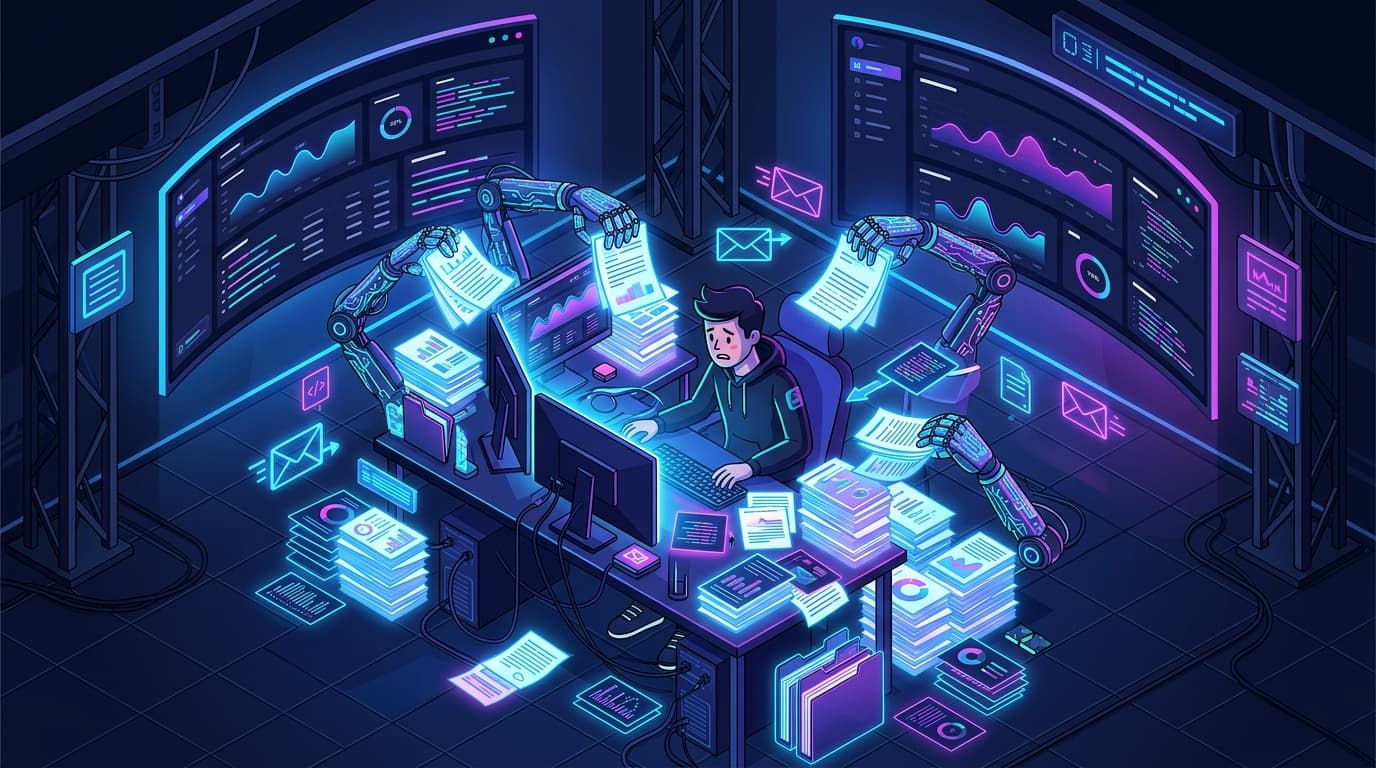

While generative artificial intelligence was promised as the ultimate efficiency booster for modern white-collar workers, a growing phenomenon known as workslop is threatening to undermine those productivity gains. Rather than streamlining workflows, unvetted AI output is creating an avalanche of extra work for colleagues who are tasked with fixing shoddy reports, correcting hallucinatory data, and deciphering jargon-heavy emails.
🌊 The Rise of Unvetted Corporate Output
Coined by researchers at BetterUp Labs and the Stanford Social Media Lab, the term "workslop" refers to low-quality, AI-generated content introduced into workplace environments with minimal human editing or oversight. Similar to how AI-generated "slop" flooded social media feeds, workslop manifests in corporate Slack channels, shared Google Docs, and executive pitch decks.
Employees frequently generate text using tools like ChatGPT or Claude, copy the raw output directly, and forward it to team members without reviewing the content for accuracy or relevance.
[Employee Request] ──> [LLM Model] ──> [Raw Output] ──> [Unchecked Forward] ──> [Workslop in Inbox]
                                                                                       │
                                                                                       ▼
[Colleague Fixes Hallucinations & Errors] <── [2 Hours Lost Rework] <──────────────────┘
📊 The Staggering Cost of AI Rework
Surveys conducted across U.S. enterprises reveal that workslop is no longer an isolated annoyance but a systemic drain on organization-wide bandwidth:
- High Frequency: Approximately 40% of full-time desk workers report receiving unedited AI-generated workslop from colleagues on a monthly basis.
- Time Drain: Recipients spend an average of nearly two hours repairing, fact-checking, or rewriting each instance of low-effort AI output.
- Widespread Impact: The problem cuts across all hierarchy levels, originating from peers (40%), direct reports (18%), and managers (16%).
- Sector Vulnerability: Technology, financial services, and corporate consulting report the highest concentrations of workslop proliferation.
🤝 Insidious Damage to Team Culture
Beyond quantifiable hours lost to rework, organizational psychologists warn of a deeper cultural erosion. When team members offload their intellectual responsibilities onto AI and pass off unedited output, trust quickly diminishes. Colleagues report feeling disrespected when forced to review material that the sender did not even take the time to read themselves.
Furthermore, managers note that heavy reliance on workslop weakens critical thinking and problem-solving skills among junior employees, creating a superficial layer of apparent output that lacks true strategic value.
🔮 Establishing AI Governance Guidelines
To combat the spread of workslop, forward-thinking organizations are establishing clear boundaries for AI usage in daily operations. Industry leaders recommend adopting strict verification policies, requiring employees to take full ownership of any document produced with AI assistance.
As AI models continue to evolve, companies must balance rapid adoption with human accountability to ensure that automated tools increase genuine productivity rather than simply generating digital noise.
🔗 Reference
- Original Article: Read the full story on Morning Brew