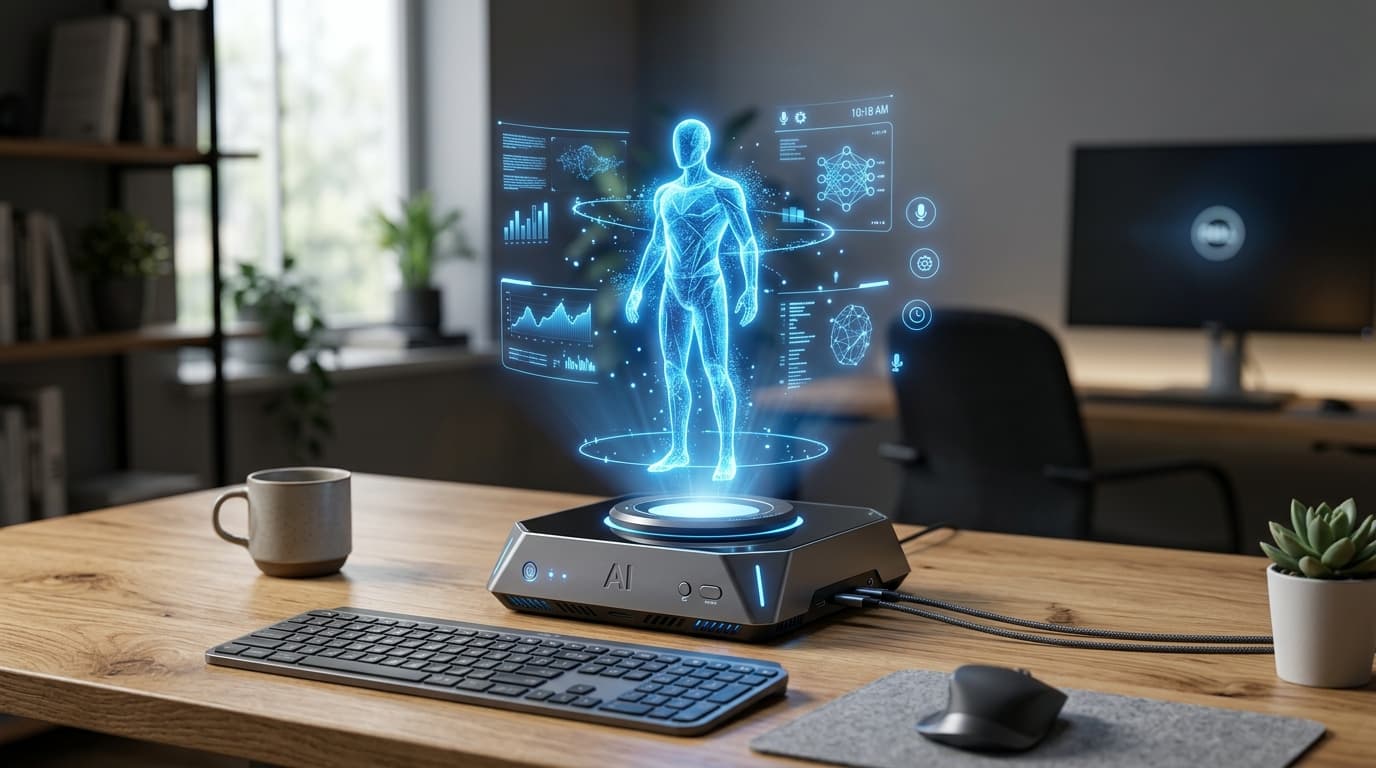

Consumer electronics manufacturers at CES 2026 are shifting focus from software chatbots to physical AI hardware. This year's technology showcase in Las Vegas highlighted a dramatic expansion of dedicated consumer gadgets engineered specifically to embody artificial intelligence assistants.
🤖 Holographic Assistants and Desktop Companions
Leading the innovation hardware wave are interactive desktop companions designed to serve as physical interfaces for digital productivity and mental wellness.
- Holographic Companions: Devices like Lepro's Ami project 3D interactive avatars that combine spatial audio with real-time conversational intelligence.
- Contextual Desk Hardware: Micro-monitors and ambient light fixtures that automatically track user stress levels, meeting schedules, and workflow focus states.
- Smart Home Appliances: AI integration extended deep into home hardware, featuring smart microwaves, adaptive culinary appliances, and autonomous vacuum robots capable of real-time object classification under low-clearance furniture.
+-------------------------------------------------------------------+
|               CES 2026 CONSUMER AI HARDWARE CATEGORIES            |
+-------------------------------------------------------------------+
|  Desktop Companions   [████████████████████]  38% Share          |
|  Smart Home Robotics  [███████████████     ]  29% Share          |
|  Wearable AI Pins     [██████████          ]  21% Share          |
|  Spatial Audio Units  [██████              ]  12% Share          |
+-------------------------------------------------------------------+
🛠️ The Challenge of Humanoid Robotics
While consumer gadgets saw immediate market adoption, full-scale humanoid robots demonstrated that physical task automation remains complex. Demonstrations showcased progress in balance and object manipulation, though execution speeds for intricate household chores like laundry folding and dishpacking still lag behind human benchmarks.
- Sensor Fusion Improvements: New LiDAR and depth-sensing camera modules have reduced spatial navigation errors in complex home environments.
- Battery Density Limits: Power storage constraints continue to limit continuous operation windows for high-torque humanoid actuators to under two hours.
💡 The Shift Toward Ambient Computing
Hardware manufacturers are moving away from traditional screen-based interfaces toward ambient computing, where AI systems operate passively in the background until summoned by voice, gesture, or eye gaze.
🔮 What's Next
As hardware components become smaller and lower-power, the line between standalone gadgets and integrated home infrastructure will continue to blur. Manufacturers expect the first wave of commercial holographic desktop companions and specialized home robotics to reach retail consumer markets by the end of the year.
🔗 Reference
- Original Article: Read the full story on Morning Brew