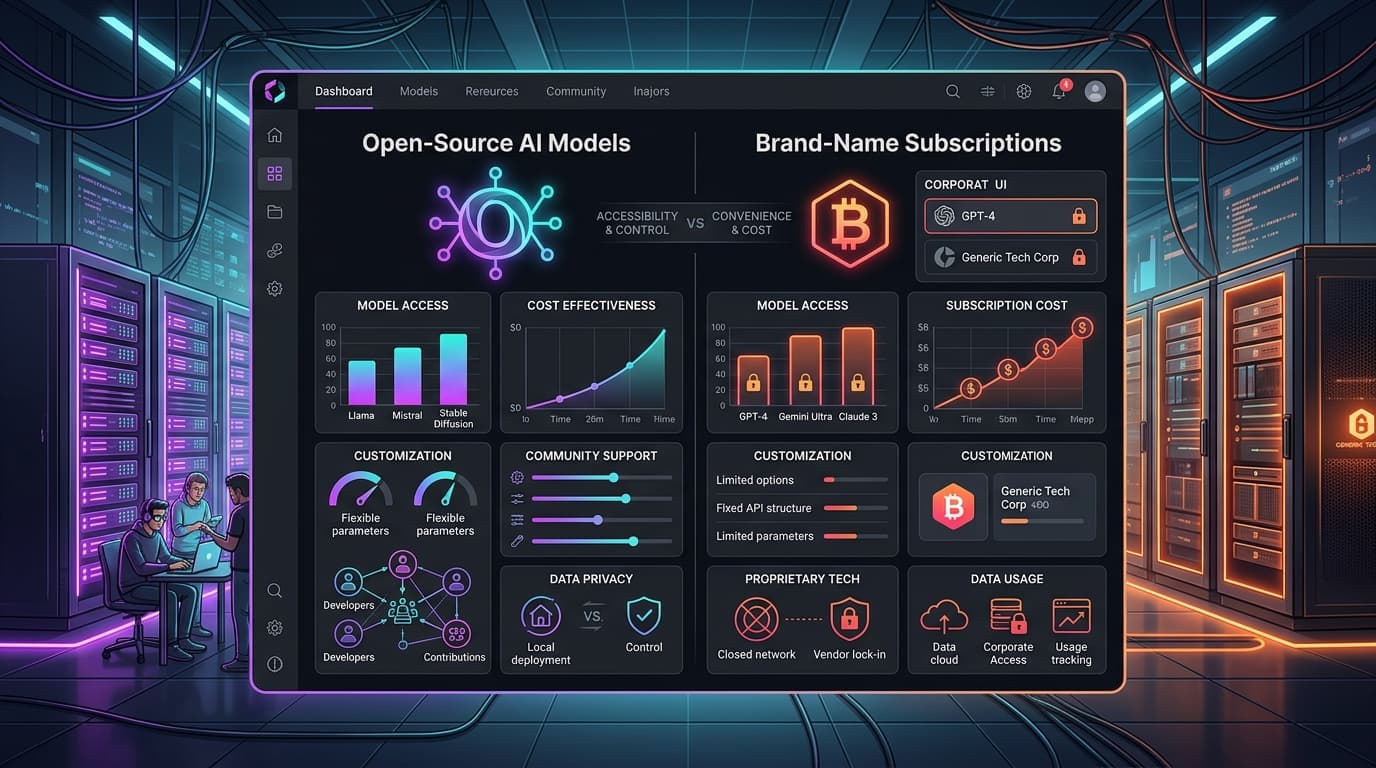

Enterprise buyers and tech teams are increasingly questioning whether premium AI subscriptions are worth their steep price tags. The release of open-weight frontier models, most notably Moonshot AI's Kimi K3, has demonstrated that high-tier reasoning and coding capabilities no longer require multi-million-dollar proprietary API contracts.
As competition accelerates across open-source and open-weights communities, corporate IT departments are auditing their software budgets to pivot away from monolithic "brand-name" AI providers.
📉 The Shift Toward Open-Weight Models
For over two years, major enterprise labs held an effective monopoly on top-tier artificial intelligence performance. Open-weight releases like Kimi K3, featuring a 2.8-trillion parameter hybrid architecture, have effectively bridged the performance gap with legacy flagship models.
Key developments driving this enterprise shift include:
- Cost Reductions: Running open-weight models on private cloud infrastructure can reduce per-token inferencing costs by up to 70%.
- Data Privacy Control: On-premise and private VPC deployments ensure sensitive corporate IP never leaves the enterprise perimeter.
- Custom Fine-Tuning: Organizations gain full ownership over domain-specific weights and specialized training adjustments.
[Enterprise AI Procurement Options]
  ├── Brand-Name Proprietary APIs  --> High Cost / Limited Control
  └── Open-Weight Frontier Models  --> Low Cost / Full Customization
💰 Cost vs. Capability Breakdowns
While flagship proprietary APIs continue to lead in fringe edge-case benchmarks, the vast majority of day-to-day enterprise workloads—such as automated code auditing, document processing, and internal knowledge search—do not require top-tier pricing.
"Companies are realizing that paying $20 per million tokens for routine tasks is unsustainable when equivalent performance is available at a fraction of the price," noted tech analysts during recent earnings calls.
🔮 What's Next for AI Pricing
As open-weight models close in on frontier performance metrics, established AI labs face growing pressure to restructure their enterprise licensing tiers. Industry observers predict a commoditization of general intelligence, forcing leading providers to compete on specialized developer ecosystems, safety tooling, and integrated enterprise support rather than raw model access.
🔗 Reference
- Original Article: Read the full story on Morning Brew